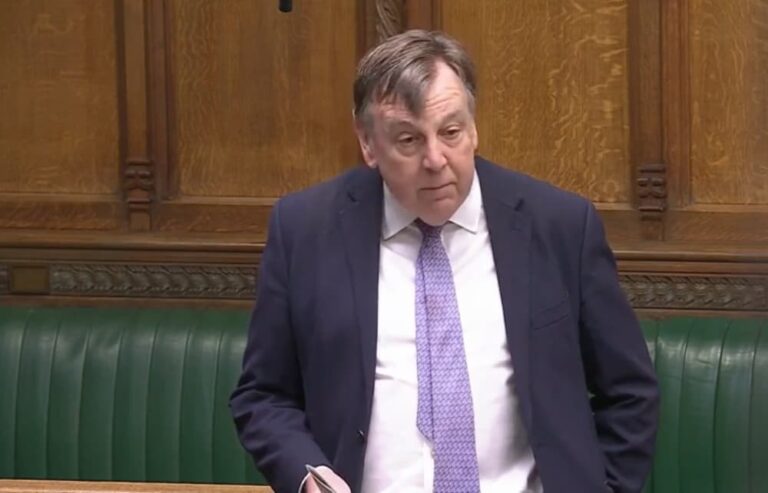
In this session, Sir John Whittingdale challenges the Government’s plans for rapid local government reorganisation, raising concerns about the strain on Essex councils, social care, and NHS coordination. He warns the timetable risks overwhelming local authorities and questions whether residents will see better services or higher costs. Alongside questions from Priti Patel, his intervention highlights the need for a more measured approach that protects communities in Essex, while ensuring reforms genuinely deliver for local people.
Debate Highlights
Secretary of State for Housing, Communities and Local Government (Urgent Question): To ask the Secretary of State for Housing, Communities and Local Government if he will make a statement on local government reorganisation.
Alison McGovern Minister of State (Housing, Communities and Local Government)
I thank the right hon. Gentleman for tabling the urgent question and you, Mr Speaker, for the—[Interruption.] I am always happy to be at the Dispatch Box; I do not know what the right hon. Gentleman is talking about. I would like to thank you, Mr Speaker, for the opportunity to set out the latest steps in local government reorganisation.
For too long, many areas have been served by complex two-tier structures that divide responsibilities, slow down decisions, duplicate costs and blur accountability. The Government’s aim on local government reorganisation is simple: clearer structures, stronger councils, quicker decisions, more homes and better services for local people. We are getting on with delivering that aim.
Yesterday the Secretary of State announced the next steps on local government reorganisation in six areas of England. He has decided, subject to parliamentary approval, to implement proposals for 15 new councils in Essex, Southend-on-Sea and Thurrock; Hampshire, Southampton and Portsmouth; Norfolk; and Suffolk. In addition to the Isle of Wight, that will see 16 councils operating across these areas in place of the current 44. The proposals are supported by two thirds of councils within these areas and many local communities. They will help to expand key towns and cities, deliver housing and growth, and simplify public services for residents. We will bring forward the secondary legislation to implement the proposals for the new local councils in due course.
On East Sussex and Brighton and Hove, and West Sussex, we have carefully considered the four proposals submitted alongside the views expressed during the consultation, but no final decision has been taken at this stage, reflecting the need to address a number of important matters. Proposed modifications will form the basis of a further technical consultation to be carried out after the May local elections, which will allow councils and partners to provide focused views before any final decisions are taken. Taking the time to get this right now provides the strongest foundations for delivery, supporting improvements to people’s lives in the places where they live and enabling councils to operate effectively from day one.
We have set out the timetable, with elections to new unitary councils taking place in 2027 ahead of them going live in April 2028. Reorganisation for the benefit of all residents is a shared endeavour, and we will continue to work with councils to see that these reforms are implemented with the interests of residents at heart.
John Whittingdale Conservative, Maldon
How does the Minister expect local authorities in Essex to be ready for elections for unitaries in a year’s time, while at the same time undertaking local government reorganisation, creating a new Greater Essex integrated care board for the NHS, dealing with unprecedented demand for social care, and implementing the Children’s Wellbeing and Schools Bill? As Essex county council has said, the breakneck speed of change across the board is simply unmanageable. Will the Minister even now rethink this proposal, and call off elections for the new unitaries next year?
Alison McGovern Minister of State (Housing, Communities and Local Government)
We are committed to the timetable that I have just set out to the House. We are working very closely with colleagues right across government on reorganisation, including the Department of Health and Social Care, to address the issues that the right hon. Member has mentioned. I have already responded to the point about the importance of children’s services.
Later in the debate Priti Patel follows up on points raised by Sir John Whittingdale, asking about whether there is adequate planning policy provision and, if not, its impact on Essex.
Priti Patel Shadow Secretary of State for Foreign, Commonwealth and Development Affairs
Thank you, Mr Speaker, for the opportunity to speak from the Back Benches on this issue, which has profound consequences for my county and my constituency.
I am appalled by the Government’s proposal to break up the great county of Essex into five unitary authorities. That is simply not acceptable. My constituents do not want this at all and they were not part of any engagement. Will the Minister tell my constituents across Witham how much more they will pay in council tax—she has already said that she has been forensically looking at the finances—and outline the impact of council tax harmonisation? What level of Government grant funding will there be for each new council? How much of the countryside will be at risk? My right hon. Friend Sir John Whittingdale has already mentioned the impact on social services and education. What about planning? This will lead to a major upheaval in Government planning policies. What does that mean for Essex and my constituents? How on earth can the Minister justify to constituents across Essex county why they should pay more in council tax for a policy they simply do not support?
Alison McGovern Minister of State (Housing, Communities and Local Government)
I thank the right hon. Lady for setting out her views and concerns in the way that she has done. I will happily write to her with further detail on the finances, because there are issues with previous decisions in Essex that are of great concern to me. As I mentioned before in relation to Cheshire and other counties, the counties remain—they are part of our history and our culture; we are looking to have effective unitary authorities.
Please view the YouTube clips here: